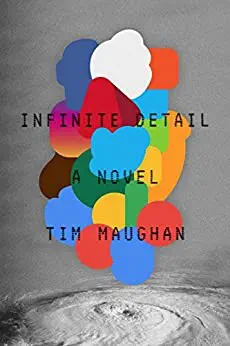
This one sat on my reading list for years and I finally got to it.
The internet goes away. Not degraded, not censored, gone, and the book moves back and forth between the years before that happens and the years after, mostly around an anarchist enclave in Bristol. I enjoyed it, with reservations.
The first reservation is that it’s more post-apocalyptic than I usually go for. The second is that the premise is far-fetched, and I don’t really believe it could happen the way it happens here.
What makes it work anyway is that Maughan isn’t especially interested in the collapse as an event. He’s interested in what it does to people, and the social reading is the genuinely good part. Who ends up with power afterwards, what substitutes for the systems that vanished, which communities were already practising for this without knowing it.
Both passages I marked are about the world before rather than the world after:
Capitalism, and its algorithms, have crushed democracy.
The pinnacle of human effort had been to create a largely hidden, superefficient, globe-spanning infrastructure of vast ships and city-size container ports […] all to do nothing more than keep feeding capitalism’s hunger for the disposable. To move plastic trash made by the global poor into the hands of hapless, clueless consumers.
That is the argument the whole book rests on, and it’s put well.
Where I come out is that it’s a little over-hyped. The world-building doesn’t go nearly as far as I wanted it to, and for a book whose entire premise is a transformed world, that’s the thing I most wanted more of.
All quotes are from Infinite Detail by Tim Maughan.